 Call Us : 08071931481
 Send Inquiry
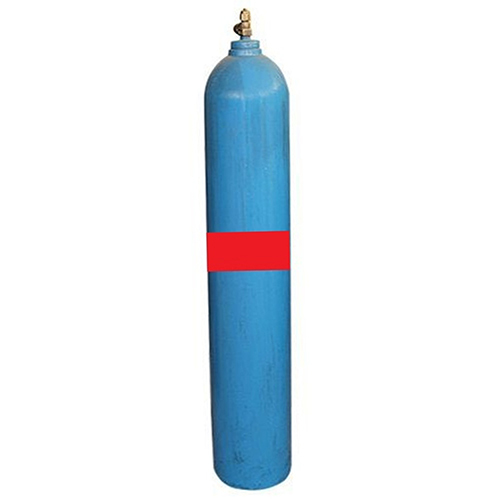
Argon-Hydrogen Mixture Gas
1000.0 INR/Unit
Product Details:
- Purity Argon: 99.99%+, Hydrogen: 99.999% (mix ratios e.g. 95% Ar / 5% H2, customizable)
- Boiling point Argon: -185.8C, Hydrogen: -252.9C
- Vapor Density Heavier than air (mixture variable based on proportions)
- Pressure Gas supplied at high pressure (150-200 bar)
- CAS No 1336-93-2 (for mixture)
- Industries Welding, Electronics, Metallurgy, Laboratory, Aerospace
- Air Gases Argon
- Click to view more
X
Argon-Hydrogen Mixture Gas Price And Quantity
- 1000.0 INR/Unit
- 100 Unit
Argon-Hydrogen Mixture Gas Product Specifications
- Argon
- -189.3C (Argon), not applicable for mixture
- Cylinder dependent
- Hydrogen
- Argon: 99.99%+, Hydrogen: 99.999% (mix ratios e.g. 95% Ar / 5% H2, customizable)
- Argon: -185.8C, Hydrogen: -252.9C
- Shielding gas in TIG and plasma welding, heat treating, furnace atmospheres
- 1336-93-2 (for mixture)
- 1.784 Gram per cubic centimeter(g/cm3)
- Heavier than air (mixture variable based on proportions)
- -189.3C (Argon), -259.2C (Hydrogen)
- Cylinder dependent
- 150 Bar to 200 Bar (as per cylinder)
- Welding, Electronics, Metallurgy, Laboratory, Aerospace
- Gas supplied at high pressure (150-200 bar)
- Argon
- Non-flammable as mixture under standard conditions
- Store in cool, ventilated, dry condition away from ignition sources
- Available in 10L, 20L, 47L or custom sizes
- Colorless gas
- UN 1954
- Non-toxic, asphyxiant at high concentrations
- Odorless
- Stable under recommended storage
- Commonly 95% Argon / 5% Hydrogen; other ratios on request
- IS:3224 (or as required for specific use)
- Shoulder color: Red (for gas mixture, as per local regulations)
Argon-Hydrogen Mixture Gas Trade Information
- INDIA
- Cash Advance (CA), Cash in Advance (CID)
- 1000 Unit Per Day
- 1 Days
- No
- Cylinder Packing
- Gujarat, Daman and Diu, Dadra and Nagar Haveli, Rajasthan
- ISO,
Product Description
Our Argon Hydrogen Mixture Gas is a versatile product that is used in a wide range of industrial applications. It is known for its non-toxic and odorless properties, making it a safe and reliable option for various purposes. Our product is carefully packaged in safe packaging options to ensure that it reaches the end-users safely and securely.Product Name
Argon Hydrogen Gas Mixture
Composition
-
Argon (Ar): 90% 98%
-
Hydrogen (H): 2% 10%
(Other ratios available on request)
Purity
-
Argon Purity: 99.99%
-
Hydrogen Purity: 99.99%
Physical State
Compressed Gas
Appearance
Colorless, Odorless Gas
Molecular Weight
Approx. 39 41 g/mol (depends on mix ratio)
Density (at 15C, 1 atm)
Approx. 1.2 1.6 kg/m
Cylinder Pressure
200 Bar / 300 Bar (depending on cylinder type)
Cylinder Sizes Available
-
7 m
-
10 m
-
47 L
-
Custom Sizes Available
Moisture Content
5 ppm
Oxygen Content
2 ppm
Dew Point
-60C or better
Valve Type
DIN / CGA / BS Standard (as per customer requirement)
Applications
-
TIG & Plasma Welding
-
Stainless Steel Welding
-
Heat Treatment Furnaces
-
Brazing & Soldering
-
Electronics Industry
-
Metallurgical Processing
Safety Classification
Non-toxic, Flammable (due to Hydrogen content)
Storage Conditions
Store in cool, dry, well-ventilated area away from ignition sources
Shelf Life
Unlimited (when stored properly in sealed cylinders)
Standards Compliance
ISO / IS / ASTM Compliant
Versatile Applications Across Industries
Argon-Hydrogen Mixture Gas serves as a shielding medium for TIG and plasma welding, facilitating precision joining and reducing oxidation in sensitive metals. The gas mixture is also crucial for heat treating processes and the creation of controlled atmospheres in furnaces. Its unique combination of inert Argon and reactive Hydrogen ensures optimal efficiency across diverse sectors, including electronics, metallurgy, laboratories, and aerospace manufacturing.
Flexible Supply and Customization Options
This gas mixture is available in standard ratios such as 95% Argon and 5% Hydrogen, but can be tailor-made to fit specific process requirements. Cylinder sizes of 10L, 20L, 47L, or custom volumes allow flexibility for various operational scales. Each cylinder, supplied at 150-200 bar pressure, adheres to IS:3224 valve standards (or as needed), ensuring seamless integration into existing gas delivery setups.
FAQ's of Argon-Hydrogen Mixture Gas:
Q: How is Argon-Hydrogen Mixture Gas commonly used in industrial processes?
A: Argon-Hydrogen Mixture Gas is primarily used as a shielding gas in TIG and plasma welding, heat treating, and to maintain controlled, inert atmospheres in furnaces. Its unique blend minimizes oxidation and enhances the quality of welds and heat-treated components.Q: What are the available cylinder sizes for the Argon-Hydrogen Mixture Gas, and can they be customized?
A: Standard cylinder sizes include 10L, 20L, and 47L, but cylinders can be customized based on specific requirements or operational demands. This flexibility allows users to manage inventory and usage efficiently.Q: Where should Argon-Hydrogen Mixture Gas cylinders be stored for maximum safety and stability?
A: Cylinders should be kept in a cool, dry, and well-ventilated area, away from ignition sources or direct sunlight. Proper storage ensures the stability of the gas mixture and minimizes safety risks.Q: What are the key benefits of using Argon-Hydrogen Mixture Gas in welding applications?
A: The mixture enhances arc stability, provides a cleaner weld environment, improves penetration, and reduces oxidation, which collectively results in superior weld quality, especially when dealing with stainless steel and specialized alloys.Q: When and why should I consider requesting a custom Argon-Hydrogen mixture ratio?
A: Custom mixture ratios may be requested when your process requires specific gas characteristics for optimal results, such as different welding methods, material types, or unique production setups. Adjusting the hydrogen content can influence weld penetration and surface cleanliness.Q: What safety considerations should I follow when handling and using Argon-Hydrogen Mixture Gas?
A: Although non-flammable and non-toxic under normal conditions, the gas is an asphyxiant at high concentrations. Always use proper ventilation, avoid confined areas, and handle cylinders with care according to outlined storage and operational protocols.Tell us about your requirement

Price:
Quantity
Select Unit
- 50
- 100
- 200
- 250
- 500
- 1000+
Additional detail
Mobile number
Email

Other Products in 'Industrial Gases' category


"We are dealing only in Gujarat & Rajasthan."
PAVAN INDUSTRIAL GASES PVT. LTD.
We Are Only Doing Business Within GUJARAT State
We Are Only Doing Business Within GUJARAT State

Contact Details 

- At. Kanakpur, Himatnagar Highway, Vijapur,Mehsana - 382870, Gujarat, India
- Phone : 08071931481

- Mr Vishnu B Patel (Director)
- Mobile : 08071931481
- pavangases@yahoo.com
Quick Links

 Send Inquiry
 Send SMS
PAVAN INDUSTRIAL GASES PVT. LTD.
All Rights Reserved.(Terms of Use)
Developed and Managed by Infocom Network Private Limited.
Developed and Managed by Infocom Network Private Limited.

